
El Salvador Got Quiet. That Is the Whole Story, and Also Not.
Ask somebody who left in 2012 what they remember and they will talk about the buses. Not the scenery. The buses, and which routes you did not take after four in the afternoon, and the way a whole colonia could go still because somebody painted a number on a wall. Ask somebody who flew in last Christmas and they will talk about traffic on the Carretera al Puerto and whether El Tunco is getting too crowded on Saturdays.
Same country. Different nervous system.
If you are looking around for a place to retire in El Salvador, or you have been comparing Central American countries because you want warm weather and a lower cost of living and you are done scraping ice off a windshield, the safety question is the one that used to end the conversation. It does not end it the same way now. That is worth walking through slowly, because the internet still mixes old headlines with new ones and treats them like they happened in the same week.
The old numbers, quickly
In 2015 El Salvador recorded 6,656 homicides. The rate was about 106 per 100,000 people. People called it the murder capital of the world and, for that year, they were not reaching. 2018 still finished above 3,300 killings. When Nayib Bukele first took office in June 2019 the official count for the year was still around 2,400 homicides, a rate in the mid-to-high 30s.
That is enough of the grim part. The point of putting those figures here is only so the later ones have something to stand next to.
By 2021 the annual total was a little over 1,100. Then 2022 dropped to about 495. 2023 was in the mid-150s. 2024 closed at 114 homicides, a rate of 1.9 per 100,000. 2025, according to the police, the attorney general, and the forensic institute sitting together as the Mesa Tripartita, finished with 82 homicides and a rate of 1.3. Through late summer of 2026 the daily average has stayed under 0.2. You can argue about counting methods if you want. You cannot argue that the street feels like 2015. It does not.
When the government actually changed the weather
Two dates matter if you care about the “when.”
June 2019 is the first one. That is when the Territorial Control Plan started. Soldiers and police went back into places the state had more or less vacated. Homicides were already sliding before the more famous crackdown. People forget that part because it makes a messier story.
March 27, 2022 is the second date. Gangs had just run up a hideous weekend of killings, including one stretch where dozens of people died in a single day. The Assembly approved a state of exception. Police got a freer hand to arrest people they said were gang members or collaborators. The measure was supposed to last a month. It has been renewed so many times that most Salvadorans under thirty treat it like weather. Authorities say more than 90,000 people have been picked up under it. Some were let go. The rest are the reason the old turf maps went blank.
Human rights groups have plenty to say about how those arrests were made and what the prisons look like. That debate is real and it is not going away. It is also not the thing a retiree feels at 8 p.m. on a Tuesday in Ataco. What they feel is that the plaza is still open and nobody is collecting “renta” off the woman selling atol.
A 2025 poll from IUDOP, the public opinion shop at the Jesuit university, found 81.7 percent of people saying crime had gone down that year. 95.3 percent said they had not been a victim. When the survey asked what was going well in the country, security was the first thing out of most mouths. Salvadorans are not naive about their government. They also live here. That combination is useful.
What safer actually means when you are buying tomatoes
A homicide rate of 1.3 per 100,000 is lower than the United States and in the same neighborhood as Canada. Officials now talk about long runs of days with no homicides at all. The killings that still happen, they say, look more like family fights and drunk arguments than the old coordinated hits. Take that with whatever grain of salt you keep for official briefings. The direction is not a briefing. You see it in whether a pharmacy stays open after dark.
Extortion used to be the quiet tax on everything small. A pupusería paid so the shutter could go up. A bus driver paid so the route kept moving. That system did not vanish from the earth, but it got knocked down hard enough that business groups and later embassy security notes started describing it as a sliver of what it was. When a shop stops paying a gang, the owner’s month changes. So does the sound of the block.
Is it a padded room? No. Phones still walk off beach towels in El Tunco. Bus terminals still reward a zipper. San Salvador still has neighborhoods you have no reason to wander if you do not know them. Common sense did not get repealed. The brand of violence that used to define the country did.
The U.S. State Department now puts El Salvador at Level 1, Exercise Normal Precautions. That is the bottom rung of their four-level ladder. A few years back it sat at Level 3. The current write-up still mentions the state of exception and notes that some Americans have been detained under it, which you should actually read if you are a U.S. citizen. The level change is still the headline. Washington is no longer telling people to think twice about coming.
Why anybody hunting a warm retirement even cares
Most people who look up “move to El Salvador” or “retire in a Central American country” are not collecting trivia about homicide methodology. They want to know if they can live somewhere cheap enough, warm enough, close enough to water, without spending the next decade flinching at scooters.
Warm is not complicated. The country sits on the Pacific at 13 degrees north. The coast is hot. Really hot some afternoons, the kind of heat that makes you plan errands for 8 a.m. San Salvador sits higher, around 2,000 feet, so it breathes a little. The western highlands are cooler still. In Apaneca you can want a light sweater after dinner. There are two seasons, not four. Dry season is November through April. Rainy season is May through October and it usually means a hard afternoon storm, not a week of English drizzle. You will not shovel snow here. You will sometimes wait out a downpour under a tin roof with a bag of mangoes. Different chore.
Money is the other half. El Salvador has used the U.S. dollar since 2001, which saves you the monthly currency headache you get in some other places. A couple can live well in a lot of inland towns on a budget that would feel pinched in Florida. The popular surf strip is no longer a secret, so rents there have climbed, sometimes a lot. Escalón and Santa Elena in the capital are not bargain basements either. Groceries, fruit, a cook if you want one, lunch out, those still look cheap if your income is in dollars earned up north. Local families will tell you the canasta básica keeps creeping up. They are right. Your comparison, if you are retiring on a pension, is still against home and not against your neighbor’s 2018 rent.
Where that new quiet actually sits
The La Libertad coast, which everybody calls Surf City now
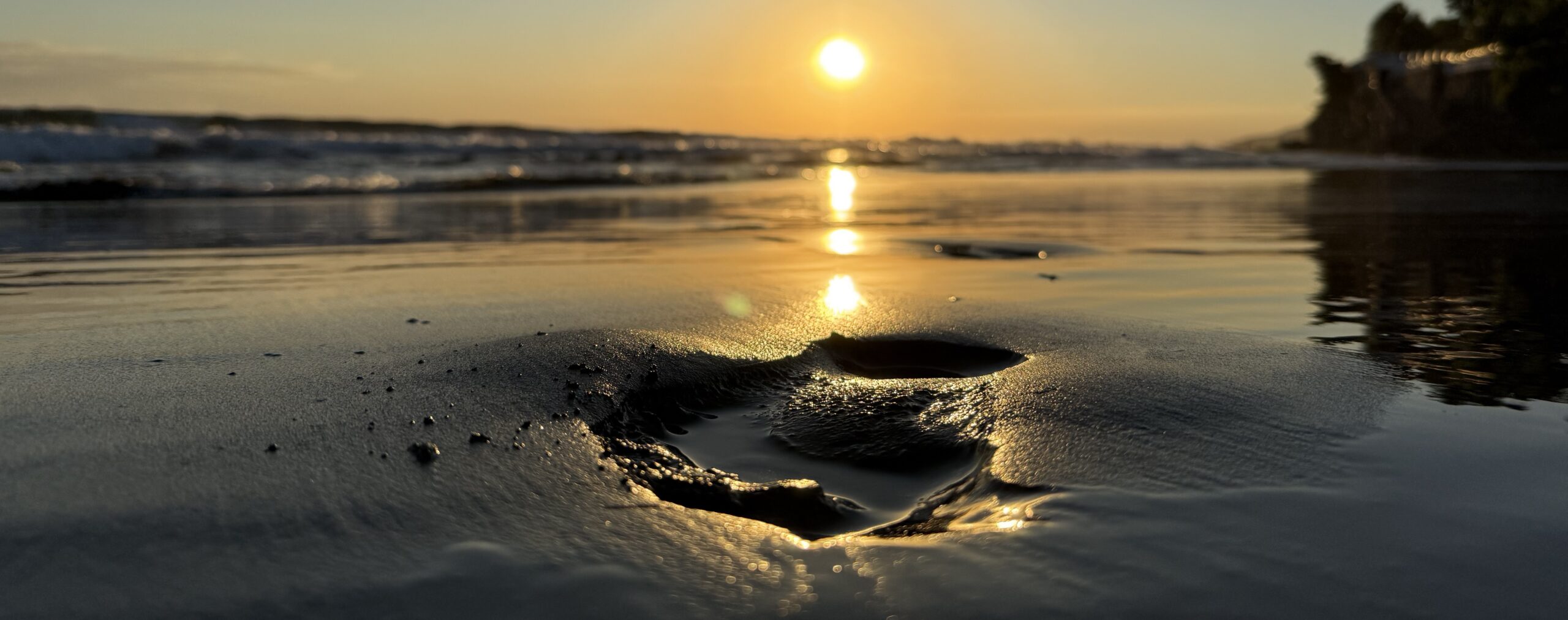
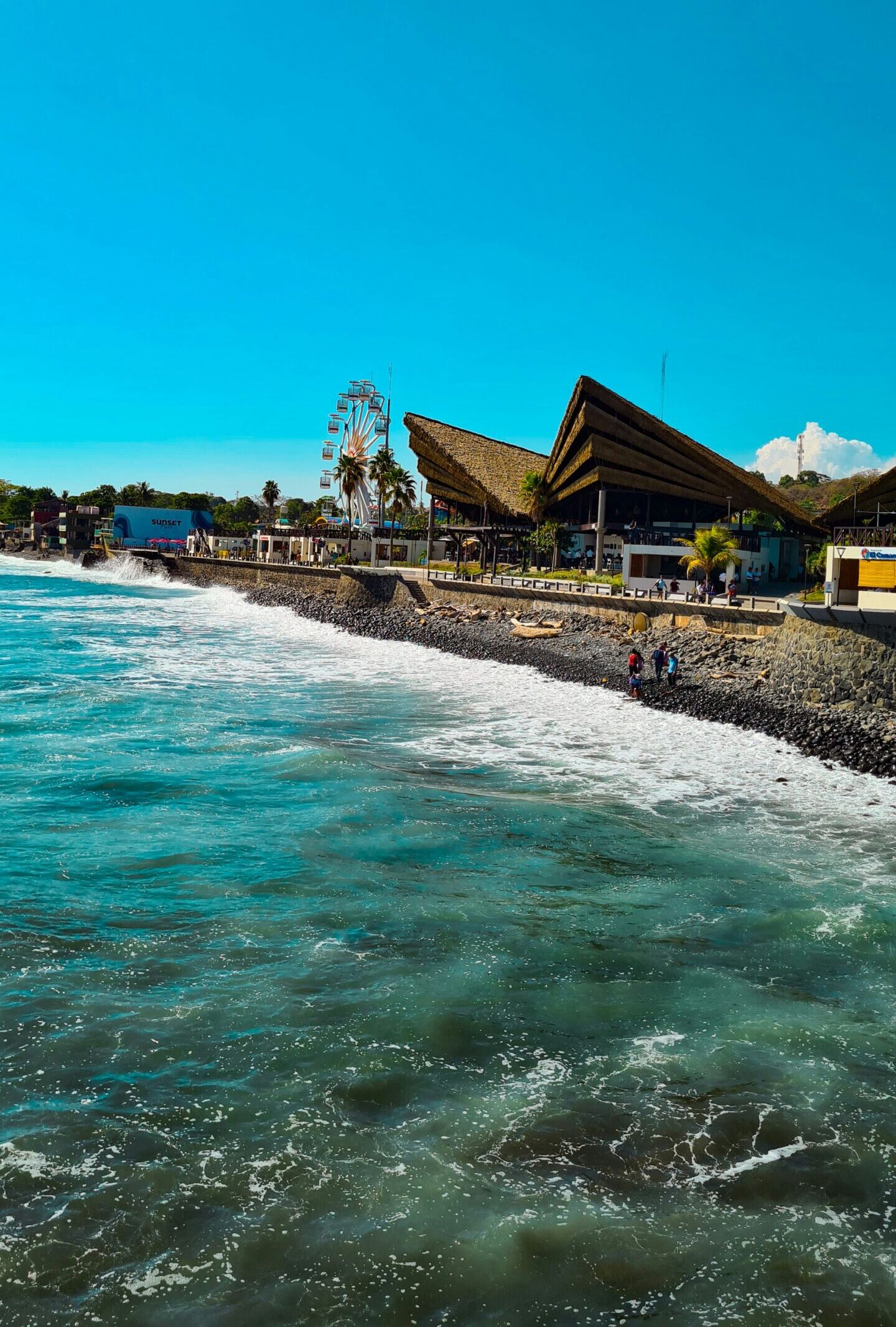
This is the stretch most foreigners see first because the airport is close and the water is right there. La Libertad, El Tunco, El Sunzal, El Zonte. Dark volcanic sand. Point breaks that traveling surfers have known about for a long time. Punta Roca is the famous one. El Sunzal holds contests. El Tunco is the loud town, the one with the rock in the water that ends up on Instagram whether you like Instagram or not. El Zonte is sleepier and more house-like. It is also the village that picked up the nickname Bitcoin Beach after a local project started taking sats in 2019.
What changed is not the wave. The wave was always good. What changed is who feels fine standing on the sand at 6:30 p.m. with a board under one arm and a beer they have not finished. Ten years ago that picture had a different edge to it. Now the bigger risk on that coast, and this is not being cute, is the rip current. People drown here. They do not, as a rule, get caught in the old crossfire.
East of the usual circuit the government has been pushing Surf City II, tying beaches in Usulután and San Miguel together with new roads and public works. That side of the country still feels less packaged, which some people prefer. If you like watching surfers more than being one, a plastic chair and a plate of fried fish will do the job in more than one of these towns.
San Salvador, which used to be the part you rushed
The Historic Center took a beating for decades. Vendors in the streets, cables like a nest, plazas you crossed with your bag in front of you. Over the last few years the city and the national government have been tearing that mess back. Cables going underground. Plazas reopened. The National Library, BINAES, turned into one of the most visited spots in the whole country. Officials have talked about more than $200 million in private money aimed at the center. During August holidays the area pulls huge local crowds. That is the tell. Salvadorans do not pack a plaza they still consider a problem.
You still live in a city if you live in San Salvador. Traffic is not a rumor. Neighborhoods are not interchangeable. A lot of foreigners end up in Escalón, San Benito, Santa Elena, or over the line in Santa Tecla and Antiguo Cuscatlán. Nobody is telling you to go wandering through a random colonia at midnight to prove a point. What is new is that downtown is on the map again, and dinner does not have to be a calculation.
The highlands, if the coast cooks you
Juayúa, Ataco, Apaneca, the rest of the Ruta de las Flores. Coffee. Murals. A weekend food festival in Juayúa that fills the streets with smoke and people. Cooler nights. This is the version of El Salvador that fits a lot of retirees better than a surf hostel strip. You want a porch and a market and a town that still says good morning. Suchitoto, up by Lake Suchitlán, plays a similar role if you lean toward colonial streets and art instead of swell.
The safety change up here is less cinematic. It is just being able to drive from one town to the next after dark without that old tightness in the shoulders. Small thing. Not a small thing.
Tourism is the receipt
You can argue with a press conference. It is harder to argue with airplane seats.
Visitor counts bounce around depending on who is counting day-trippers from Guatemala and Honduras versus people who sleep here. The shape of the line does not bounce. Roughly 2.6 million international visitors in 2019. A hole in 2020. About 2.5 million in 2022. Past 3 million in 2023. Close to 4 million in 2024. 2025 finished around 4.12 million visitors, something like 3.44 million of them overnight tourists, and close to $3.6 billion in tourism receipts. UN Tourism has had El Salvador near the top of the world for growth since 2019. The United States and Guatemala send the most people. Canada and Mexico and a thinner European stream are more visible than they used to be.
The volcanoes did not relocate. The beaches did not get reinvented. Airlines and families stopped treating the country like a stunt. That is the variable.
Events did some of the advertising. Regional games. A Miss Universe year that put San Salvador on televisions that had never seen Plaza Barrios. Surf contests along the Bálsamo Coast. Hotels followed. So did restaurants that would not have signed a lease in 2016. For somebody thinking about a winter place, that stuff is not fluff. It means more flights, more pharmacies that stock what you are used to, a few more people at the front desk who can switch into English when they have to. It is still not Costa Rica’s machine. Plenty of travelers like that.
Bitcoin, without the speech
Yes, El Salvador made Bitcoin legal tender in 2021. First country to do it. The seed was already in El Zonte, where a community project had people paying for haircuts and pupusas in sats. Then the national law turned the whole map into a talking point for crypto Twitter.
The rules changed in 2025 after the IMF deal. Private businesses do not have to take Bitcoin anymore. Taxes are in dollars. The law still treats Bitcoin as something special, exchanges keep a capital-gains break, and the government has gone on holding thousands of coins. On a regular Tuesday the dollar is what buys the eggs. In El Zonte and a few other pockets you can still pay a lunch tab with Lightning. In a random store in San Miguel you will get a look if you try.
So if you are a Bitcoin person hunting a place that already had the argument in public, this is still that place. If you were told you could live an entire life here without touching dollars, somebody sold you a cleaner story than the country actually runs.
Other countries noticed, which is another kind of proof
The United States is still the heavy partner. Remittances from Salvadorans living there remain a huge piece of national income. In 2026 Washington has called Bukele a valued partner in the region and the two governments signed a reciprocal trade arrangement on top of CAFTA-DR. U.S. investment notes now list the drop in violent crime as part of the pitch. That is a duller version of the same thing tourists say after a week on the coast, just written by people who wear lanyards.
China is in the picture too, and has been since El Salvador recognized Beijing in 2018. There have been gifts, some infrastructure talk, a solar project, conversations about the east where a new airport has been in the works. Trade runs one way more than the other. El Salvador buys a lot from China and sells it very little. Big Chinese factory money has been slow to show up. A small country trying to keep more than one door cracked is not a mystery.
The economy has picked up with the calm, just not as dramatically as the murder chart. 2025 growth came in around 3.9 percent. Forecasts for 2026 sit in a band, low-to-mid 3s from some multilaterals, higher from the central bank after a strong first half. Tourism and construction and private building are the pieces people tie to security. Foreign direct investment improved off the bad years and is still not a flood. Peace opened the shop. It did not, by itself, turn a dollarized economy of six-plus million people into an industrial magnet.
Rating agencies have nodded at the security gains and they still watch the budget. For a person living on a pension that is background noise. Dollarization already took currency panic off the table. The live question is whether the street stays this quiet, because that is what holds up the tourism jobs and the housing market foreigners bump into.
Why this country is back on the list
For a long time the retirement map in this part of the world was Costa Rica, Panama, maybe Belize, maybe a lake town in Guatemala for a certain kind of traveler. El Salvador was the one you flew over.
The reasons it is on lists now stack up instead of arriving as one miracle.
- It is warm all year and you pick your climate by altitude, not by moving to another country.
- The Pacific is a short run from the international airport if you stay on the La Libertad coast.
- The dollar is already the money.
- Food is good. If you eat like a local it is cheap.
- There is actual surf, and also chairs for people who only came to watch.
- Bitcoin still has a footprint even after the law got softened.
- The safety numbers that used to kill the conversation now keep it going.
Other Central American countries have beaches. Other ones have lower inland prices. What you could not find until recently was this mix inside a country everybody had filed under “not a chance.” That is why searches for retire in El Salvador and move to El Salvador and lower cost of living in Central America started turning into floor plans instead of doomscrolling.
There is a season to the curiosity. People in Minnesota start looking in October. By January the dry season is on, the volcano views are clean, and the coast is full of visitors who swore they would never come. Some leave with a sunburn and a story. A smaller group starts asking about long-term rentals and whether the mountains would suit them better than the salt air.
The part that should stay in the picture
A clean travel essay would skip this paragraph. That would be dishonest.
The state of exception is still the legal floor under the security policy. Groups that document detentions say plenty of people got swept up who were not on any gang list. Deaths in custody have been reported in the hundreds over several years. The incarceration rate is now among the highest on the planet. Those facts sit next to the homicide chart whether a tourism ministry likes it or not.
For somebody choosing a place to spend the next chapter, the test is narrower and more selfish, and that is fine. Can you walk to dinner. Can visiting kids ride from the airport without a family meeting. Can you leave town for a weekend and come back to the same house. On those tests, 2026 is not 2015. Petty theft did not disappear. Heat did not disappear. Lines at government windows did not disappear. The public grip of the gangs did.
A Tuesday, not a slogan
Weekday morning in Ataco is coffee and paint on the walls and a dog asleep in the shade. Same morning in El Zonte is warm water and a cafe that may take Bitcoin and may just want cash. Same morning near Plaza Barrios is a downtown people use again. The thread is that folks are outside.
That is the change that does not fit on a spreadsheet. A rate is a rate. A plaza with kids in it on a Sunday is a place. El Salvador spent a generation being described as a problem to manage. A lot of visitors, and a lot of people who never left, now describe it as a country you can inhabit.
If what you want is a lower cost of living, weather that does not require a snowblower, a real beach, and a Central American option you do not have to apologize for before you have even packed, this is the version of the country that exists now. The ice can stay where you left it.